Wednesday, November 3, 2010

A New Path for Revitilization


Yesterday voters elected Ed Fitzgerald, Mayor of Lakewood, as the new County Executive for Cuyahoga County. Under the backdrop of the worst corruption scandal in county history, Fitzgerald was able to overcome his Republican challenger, Matt Dolan, who spent millions of dollars linking Fitzgerald to the current scandal facing the local Democratic party. As the first County Executive, Fitzgerald will be faced with a laundry list of challenges. While restoring faith and credibility in county government should be his main priority. Fitzgerald has a unique opportunity to re-imagine Cleveland's role as the economic nucleus of Northeast Ohio.

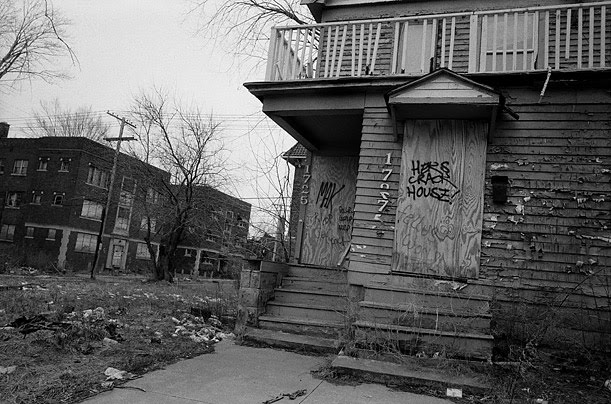
Earlier last month, urban development experts from across the country gathered in Cleveland to discuss how to use vacant properties as an economic asset. Many cities across the country have had no choice but to make this issue a priority, as towering mortgage debt and urban disinvestment continues to plague many inner-city communities. In 2009, Cleveland alone witnessed more than 20,000 foreclosures, according to cases filed in the Cuyahoga County Common Pleas Court. This coupled with rising population loss and increasing levels of poverty, has undermined real GDP growth in the region. Yet while these structural challenges seem impossible to address, there is hope as some communities in the city are beginning to turn the page. Urban wine gardens are being created in the Hough Neighborhood, and University Circle is only at the cusp of witnessing how the new transit line will help link its assets to Downtown Cleveland. "Instead of figuring out what to do with (all) the vacant land, we need to figure out for each neighborhood, 'What are your most pressing problems, and in what way can vacant land be part of an answer?" says, Terry Schwarz, director of Kent State University's Cleveland Urban Design Collaborative. And it may take this neighborhood approach to really help make Cleveland, and thus Cuyahoga County, more economically competitive. 

Nonetheless, as Fitzgerald begins his transition as the region's newly elected leader, he must do all the he can to listen to leaders in Cleveland to develop a sophisticated economic agenda that places the city at the center. In this age of austerity, rethinking how we utilize our must underused properties will be integral to that economic agenda. Cleveland can't afford to wait for another historic election to solve its problems. If Fitzgerald does his due diligence, he can help lead the both the county and the city to a new age of prosperity. 


Wednesday, October 13, 2010

Cleveburg Rising

Check out this great post via  Burgh Diaspora by Jim Russell


The next Silicon Valley won't look like Silicon Valley. The era of greenfield economic development is over, at least in most OECD countries. Here in the United States, we've done a good job of picking that low-hanging fruit. The next innovation heartland will be in the Rust Belt, brownfield economic development.

Richard Florida, and others, are very good at mapping where the current clusters are located. We also understand why regions such as Silicon Valley are now economic powerhouses. Unfortunately, that hindsight doesn't project well into the future. What we read and hear is that the current winners will only get stronger. In many cases, that's likely true. But there will be new winners. How might we divine them?


Primary metals and all of manufacturing continued to decline as a share of metro Pittsburgh’s employment earnings. But it didn’t consign the region to permanent low- prosperity status. By the 1990s Pittsburgh was at or above the national average in per capita income even though primary metals accounted for only 4 to 5 percent of employment earnings and 17 to 19 percent for all of manufacturing. In 2008 Pittsburgh returned to its previous peak compared to the nation—104 percent of the national average. Of the 55 metropolitan areas with populations of a million or more, it ranked 16th and was more prosperous than Dallas, Raleigh/Durham, Austin, Portland and Atlanta.
In terms of prosperity, Pittsburgh hits way above its weight. If Cleveland could gets its act together, look out world:
Cleveland historically had the more diversified economy [than Pittsburgh] and traditionally was the most successful and largest city in the region. The city primarily built component parts, providing the essential industrial pieces to other mostly producer products. Companies such as Parker Hannifin, Standard Products, Cleveland-Cliffs, the Eaton Corporation, Yale & Towne, TRW, White Motor, and Sherwin-Williams exemplify the entrepreneurial efforts that build Cleveland.

This proud historical legacy is a blessing and a curse. It is a curse because the industrial decline of Cleveland has been more gradual, punctuated by many efforts to restructure alongside a common belief that corners were being turned—only to face another setback amid the steady decline of employment in industrial manufacturing across the Midwest. But it is a blessing because many parts and components are still manufactured in the city, along with the important service components that accompany their distribution. These industries remain highly competitive in the global economy, sustaining the region for export markets and defining a source of expertise and strength.
Pittsburgh shed its manufacturing base much more quickly than Cleveland did. Hence, Detroit looks at Pittsburgh as opposed to Cleveland as a model for a way forward. Ironically, Cleveburgh is a tried and true economic geography that lends itself to cluster-based economic development:

The fortunes of regions, of course, are tied to the fortunes of their firms and industries. The success and specialization of 19th-century achievements are still visible and still define many of the expectations, capabilities, and obstacles in this region. Writing in 1936, economic geographer Richard Hartshorne noted that the Pittsburgh-Cleveland region—geographically situated in western Pennsylvania and northeastern Ohio—was one of the most important regional economies in the United States.
The name "Richard Hartshorne" should be familiar to anyone who majored in geography at university. 
(I didn't realize he was born in Kittanning) Cleveburgh was obvious in 1936. Cleveburgh should be obvious now. It isn't. I think we are looking at the first regional innovation cluster to cross state boundaries. At least, where better to test the policy idea?

Cleveburgh, not the Great Lakes Economic Initiative or the Global Midwest, is the policy geography of the future. The TechBelt is further along than anything John Austin or Richard Longworth has proposed. The reason why is buried in obscure texts about historical geography. If only more analysts and pundits read them.

Monday, September 27, 2010

The Washington Post Takes a Trip To Cleveland

Check out this great article on Cleveland from Washington Post Travel Section:

Impulsive Traveler: A Cleveland neighborhood rises above the city's Rust Belt image
By Maryann Haggerty
Special to The Washington Post


There's something appropriate about going to Cleveland to pay homage to Bruce Springsteen, the poet of Rust Belt rock. What I didn't expect in that much-maligned city was a fun neighborhood of historic bed-and-breakfast inns, up-to-the-minute restaurants and one of the best traditional food markets I have ever visited.

Cleveland, about seven hours by car from the Beltway, was the first stop my husband and I planned on a longer Midwestern road trip. The goal was to see the special Springsteen exhibit that runs through Dec. 31 at the Rock and Roll Hall of Fame downtown. But somehow, nearly every downtown hotel room was booked by convention-goers.

Serendipity (and some Internet trawling) led us to a B&B, the J. Palen House. Maps showed it a few miles from downtown, across the Cuyahoga River and close to a station on the city's light rail system.
Make no mistake, the Great Recession has battered Cleveland, already shaky from the decline of Midwestern manufacturing. The neighborhood around the J. Palen House isn't the hardest hit, but it's transitional. The B&B, a pretty purple Victorian, was the most obviously gentrified building on its block. Rooms were large and lovely, with the sort of flouncy touches that turn a night on the road into a romantic interlude.

The host, Scott West, offered us a tour of the neighborhood, called Ohio City. No big deal, he assured us; the walk would take just a few minutes.

As Scott led us past solid renovated houses and a few old industrial buildings, he explained that Ohio City is one of Cleveland's oldest neighborhoods, once an independent city and home to Irish and German immigrants, including brewers. There's still a sweet-stale smell of beer in the air, but now it comes from Great Lakes Brewing Co., which opened in 1988. (Although it has microbrewery cred, Great Lakes is more than a corner brewpub with a few copper tanks. It ships 100,000 barrels a year.)

We turned the corner onto Market Avenue, a restaurant-lined block lively with young Clevelanders. Scott pointed out the highlights - the Flying Fig, considered one of the city's best locavore restaurants; a nice wine bar; the Great Lakes brewpub. Around the next corner, on 25th Street, there were more shiny new restaurants mixed in with worn neighborhood storefronts. And a few hundred yards away, in a handsome red-brick building with an eye-catching clock tower, was the West Side Market, one of those century-old food-stall palaces. Later, I found that city boosters are trying to brand the immediate neighborhood the Market District and attract even more restaurants and food-oriented retailers.

We started the evening with a pint at Great Lakes - I opted for the Burning River Pale Ale, a nod to the bad old days, when the Cuyahoga infamously caught fire. Dinner at the Flying Fig was all that a fashionable New American farm-to-table meal should be: creative, fresh, seasonal. Afterward, we wandered the little neighborhood and learned that in this city with brutal winters, the locals flock to sidewalk cafes and outdoor beer gardens on a pleasant summer evening. We read menus and added to our list of must-visit places for our short stay: Bar Cento for Italian-ish; Momocho, several blocks away, for what it called Mod Mex.

In the morning, we took the Red Line of the light-rail system, the Rapid, to the main Tower City station downtown. After a frustrating wait there, we determined that the Waterfront line, which runs near the Rock Hall, no longer operates on weekdays even though it's on all the system's maps. Nobody had bothered to put up a sign on the platform, and transit employees were dismissive. It turns out that most service on the line, always underused, was discontinued this year for budget reasons. I grumbled, but as we knew from past visits, the walk to the Rock Hall is less than a mile. Did you know that Bruce, who made his name as the voice of the gritty '70s, was touring around the country in the 1960s, long before he became famous? Or how much he paid for the guitar he held on the cover of "Born to Run"? (It was $180, maybe $185, Bruce recalls - a fortune to him at the time.) Or how little I probably paid for my ticket to the "BTR" concert in 1975, if the other posters from that tour are any guide? (If I paid more than $10, I should have had a much better seat.)

The Hall lets you go in and out all day, so you're not stuck with a museum cafeteria. We decided against Iron Chef Michael Symon's downtown restaurant, Lola, instead opting to hunt down Polish Boy sandwiches. The Polish Boy, a very local specialty, is a sausage topped with cole slaw, French fries and barbecue sauce. I know, but it's good - and we found some not far away, at a hole-in-the-wall called Freddie's Southern Style Rib House.

But the highlight - the big pig-out revelation - came the morning we visited the West Side Market. It's huge, vastly outsizing Capitol Hill's beloved Eastern Market. It's sparkling clean, putting Baltimore's Lexington Market to shame. And the variety! Pasta, sausage, cheese, pastry, pierogies, tamales, meat, meat, meat. (Produce, not so hot.)

We still had two weeks of road trip ahead, so we restrained ourselves, buying a pound of raw-milk Amish cheddar, pretzel-and-cheese concoctions called pretzel boats, and some spicy distant cousins of beef jerky known as smokies. A few days later, when we finished the cheese, we agreed to shift our route home and swing back through Cleveland.

This time, it was the J. Palen House that had no rooms available, so we stayed in another romantic, historic Ohio City B&B, Stone Gables. We had dinner in yet another local-food restaurant and the next morning filled a cooler with yet more West Side Market purchases - beef pasties, chicken enchiladas, pasta, bread, sausage, cheese, smokies. After all, it was only a seven-hour drive home.

Saturday, September 25, 2010

Making Government Work


The recent arrests of County Commissioner Jimmy Dimora and former County Auditor Frank Russo further cemented the fact that Cuyahoga County government has been paralyzed by lack of accountability and transparency.  For years, Dimora, Russo, and others used their office and taxpayer dollars to advance their own political and personal interests, while the region they served witnessed massive brain drain and lost thousands of jobs. Incompetent leadership in government at any level is a recipe for conventional thinking and persistent decline. For Cuyahoga County, and the Greater Cleveland area, this is has been a sad reality for far too long. However, with the new county charter and the upcoming county elections, there is a small glimmer of hope that the newly elected leaders will put restoring faith in government as their number one priority.

When voters head to the polls on November 2nd, the most important vote they cast will be for the newly elected county executive. So far, a majority of the candidates have a promised specific policies to promote openness and transparency. According to a survey conducted by the Cleveland Plain Dealer, a majority of the candidates agreed to the following provisions:

  • Make public records available without delay
  • Provide timely access to their calendars of public business
  • Disclose any gifts they receive as public officials and the values of them
These are all steps in the right direction. Yet, beyond these basic recommendations, voters should look towards putting their faith in the candidate who best articulates a vision and a plan to usher in a new era of leadership in county government. One that is grounded in understanding the fundamental challenges our region faces in today's global economy, not based upon patronage and favoritism. As the sole shareholders of our region, citizens must take their vote seriously. We must hold our elected officials accountable. Each of us have a stake in the economic prosperity of our region. To invoke the words of Thomas Paine, let us begin the work of remaking our county. If we wait any longer, it may be too late. 


Wednesday, September 8, 2010

A Bold Call to Action

The continued challenges facing the Warehouse District have forced many leaders in Cleveland to reassess the cities viability as destination for young professionals. Reverend Jawanza Karriem Colvin wrote a compelling editorial articulating his vision for the city. It's a bold reminder to all of us who care deeply about the future of our city. Check out the piece below:

Finding Strength in Open Minds:


Last week's reports on the arrest, detention and alleged beating of two African-American corporate executives in the Warehouse District are disturbing, but unfortunately not surprising. The Warehouse District, a section of the city that at its best should reflect the trendy, cosmopolitan character of Cleveland, is gaining a reputation for racial insensitivity.

Coupled with the shocking allegations of police misconduct, this incident only complicates attempts to successfully market the city and the region to aspiring young professionals. As we know, the recruitment of this population is an important part of fulfilling any hopes of regional prosperity, which can positively impact the quality of life for our communities and neighborhoods.

The arrival of bright, vibrant and energetic persons seeking to begin their careers with the prospect of eventually settling down, starting families and making civic contributions is an increasing reality for some American cities and an urban planner's dream in others. Today, growing and emerging regions recognize that this is a population they simply cannot do without. They also recognize this is a demographic that is increasingly diverse in race, culture and place of origin.

As a result, the message is clear: Tolerating intolerance is self-defeating.

If Cleveland and Northeast Ohio are going to attract a new generation of talent, they must -- along with reimagining the local economy -- continue to nurture an inclusive and open environment across racial, cultural and geographical lines. Historically, such lines, instead of being points of meeting for healthy discourse on our commonalities and differences, have become intersections of ignorance and discrimination.

As this region wrestles to find its 21st-century political and economic identity, it must expend similar intellectual and soul-searching capital to frame a new cultural one. It must do so or risk lagging behind in a competitive global marketplace where the talent pool is multiracial, multicultural and more tolerant of differences than previous generations.

How do we accomplish this?

There are no quick formulas or magic potions for changing hearts and minds, nor are there assurances that the embracing of inclusion in our personal lives will translate into more progressive policies and practices, or vice versa. However, there is an opportunity and a challenge. The opportunity at this moment is to celebrate the growing diversity of our region and to continue to increase such efforts in defiance of the pockets of prejudice that still remain in sectors of the public, private and commercial arenas.

The challenge is to summon the courage to confront our deeply embedded historical, cultural and institutional "isms," which can manifest themselves in the form of glass ceilings, abuses of power and violations of the most basic civil and human rights. W.E.B. Dubois, the famed African-American sociologist, asserted that the greatest issue of the 20th century would be the color line. It is a new century but, sadly, we have still not solved this old, vexing problem of race and difference; and while some pray for it to simply go away, the future will not wait for us. As a matter of fact, it's time to catch up.

Colvin is the pastor of Olivet Institutional Baptist Church in Cleveland.

Sunday, August 29, 2010

Rethinking Homeownership


If your in Cleveland, take a drive through the Kinsman neighborhood or Slavic Village, and you will easily see the symbols of America's most recent housing crisis. Fueled by poor regulation and exuberant behavior from both banks and homeowners, the era of sub-prime lending has given the argument against homeownership in America even more credibility. The blight, crime, and poverty associated with the recent foreclosure crisis, particularly in urban America, should give our leaders an even greater sense of urgency to dramatically transform our nation's housing policies.

Check out Time's Magazines new cover story: "The Case Against Homeownership"

It's a good piece that can help inform a new conversation about how we can bring prosperity and stability to communities like Cleveland who are still struggling to recover from our most recent housing crisis. 


Sunday, August 22, 2010

Detroit's Master Plan

The 21st century is quickly becoming the age of the city. Today, half of the world's population lives in cities. And in the developing world, cities are constantly expanding to meet the demands of massive population growth in the urban core. This narrative however is quite different in the United States. While economically metropolitan centers are critical to the U.S. (90 cents of every dollar made in the U.S. comes from U.S. cities), many are facing declining tax revenues and massive population loss. Detroit, like Cleveland, is one of those cities that shares this narrative. Currently, the city has an $85 million budget deficit, an unemployment rate of 14%, and a high school graduation rate of only 37.5%.

Understanding the challenges facing the city, earlier this week, Detroit Mayor Dave Bing announced his new campaign to revitalize the city. While the details of the plan will primarily depend on public input, the Mayor has boldly challenged his constituents and city officials to think differently about redeveloping a shrinking city. Like many other mayors of shrinking cities, Bing is beginning to embrace the new era of downsizing. Youngstown, Ohio and Flint, Michigan have paved the way for how we think about redevelopment in this new era. They have torn down blighted homes to create more green space and have consolidated city services with inner-ring suburbs to save tax dollars.

Now more than ever, cities like Detroit and Cleveland need to think critically about the merits of downsizing. For many urbanists this is a hard idea to accept, as the notion of downsizing an American city goes against our optimistic nature. Yet, their is immense opportunity for these cities if downsizing is done right. If Detroit can embrace its shrinkage through innovative land use plans, it could allow the city to focus more on addressing the systemic problems of creating jobs and improving public schools. Let's see if Detroit can prove us wrong and return to its glory days. Cleveland could use the competition.